
Renovate or Move? How Surrey Homeowners Should Run the Numbers
Outgrown the house but love the street? How to weigh the true cost of moving — stamp duty, fees and upheaval — against extending or renovating the Surrey home you already own.
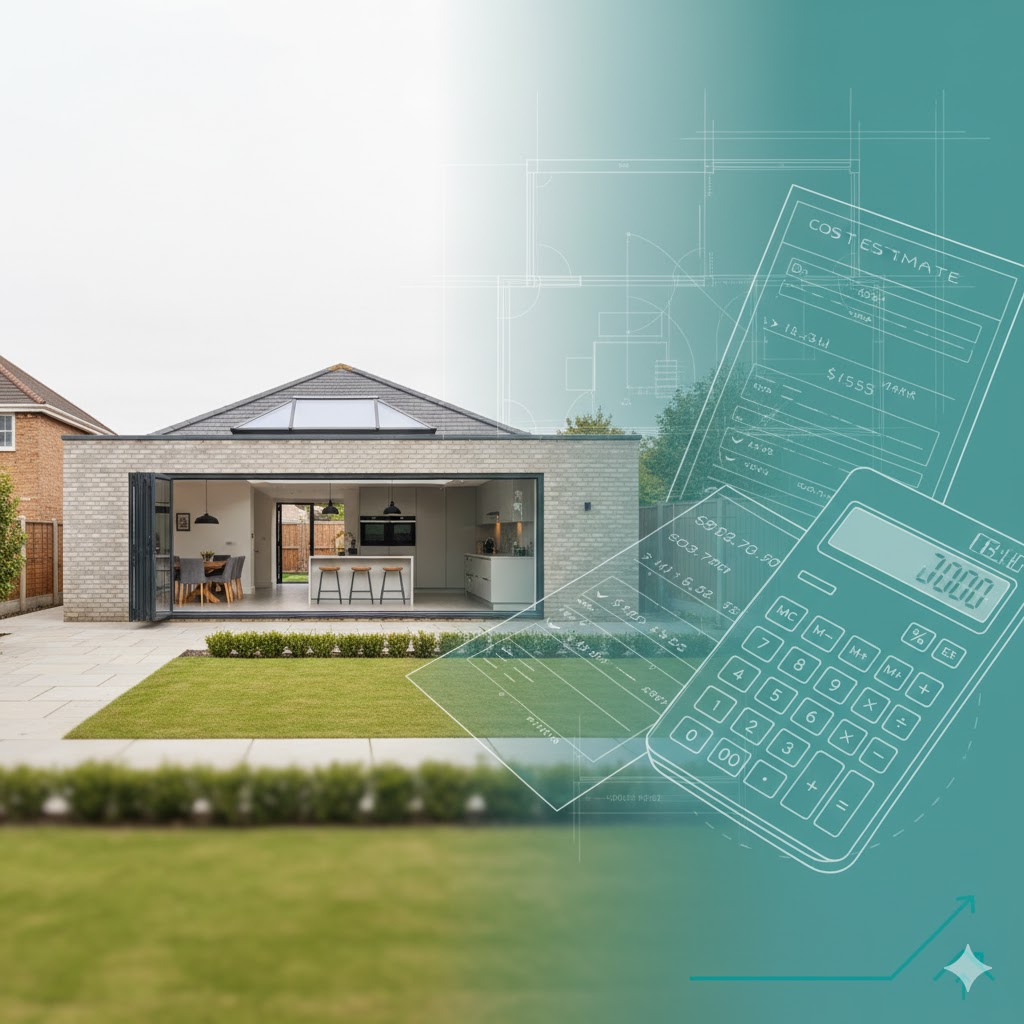
It's the conversation happening at kitchen tables across the Reigate and Redhill commuter belt: we love the street, the schools work, the trains work — but the house doesn't fit us any more. Two doors open from there. Find a bigger house and move, or stay and make this one bigger and better.
Both are legitimate. But they're rarely compared honestly, because one side of the ledger — moving — hides its costs in the excitement of property portals, while the other — improving — wears its costs on its sleeve. Here's how we'd actually run the numbers.
The true cost of moving
Start with an uncomfortable truth: a large slice of what you spend on a move buys you no space at all. Before the new house gives you a single extra square metre, you'll have paid:
- Stamp duty on the purchase — the big one, and it climbs with the price of the house you're buying. On the family homes this part of Surrey trades in, it is typically the largest single transaction cost of the move.
- Estate agent fees on the sale.
- Legal fees, searches and surveys on both ends.
- Removals, storage and the long tail of a move — new curtains and carpets, redecorating someone else's colour choices, fixing the things the survey flagged.
Every pound of that is a transaction cost — spent whether or not the new house actually serves you better. And you'll often still renovate anyway: the new kitchen you couldn't have in the old house frequently becomes the new kitchen you're now doing in the new one.
None of this makes moving wrong. It makes moving expensive in a specific way — and that shape matters when you compare it with the alternative.
What the same money does if you stay
Improvement spending has the opposite shape: nearly all of it converts into space, function and value in the asset you already own. Realistic Surrey figures:
- Single-storey extensions: £2,500–£3,500/m² including VAT. A typical 21m² rear extension — the open-plan kitchen-diner that transforms a family ground floor — lands roughly between £52,000 and £74,000, plus professional fees of 10–12%. Our cost-per-m² guide breaks down exactly what sits inside that rate.
- Two-storey extensions share one roof and one set of foundations across two floors, so the per-m² rate typically drops 10–20% — the most cost-efficient square metres you can add.
- Loft conversions: from around £1,500/m² including VAT for a Velux conversion, around £1,800/m² for a dormer and around £2,200/m² for a hip-to-gable with rear dormer — an extra bedroom without touching the garden. See our Surrey loft cost guide.
- Whole-house renovation — reworking the layout you have — often unlocks more than owners expect: the underused dining room, the dead hallway, the garage storing cardboard boxes.
Set the comparison honestly: the full transaction cost of moving buys you the right to start again somewhere else. The same sum, spent on the house you already own, can buy a transformed ground floor or an extra bedroom — in the street you already chose, without touching the mortgage rate you may not want to reopen.
The case for moving — honestly made
We're a design and build firm, so you'd expect us to say "always improve." We won't, because it isn't true. Moving genuinely wins when the things no builder can change are the problem:
- Location, commute or catchment. If the fundamental issue is where the house is, no extension fixes it.
- The plot. A garden that can't absorb an extension, no side access, nowhere for the space to go.
- Ceiling value. Every street has a level above which buyers simply won't pay, however lovely the work. If your home is already near the ceiling for the road, a major improvement may not be fully reflected in resale value. (If you're improving to live there, this matters less than people think — but you should decide with your eyes open.)
- Planning reality. Occasionally the constraints — listed status, conservation setting, an exhausted permitted development allowance — genuinely cap what's achievable. Worth establishing early; see our green belt rules guide for how the constraints actually work around here.
A simple way to run the comparison
You don't need a spreadsheet with false precision — you need four honest numbers and one honest question:
- What would the move really cost, all in? Stamp duty on the target house, agent fees on yours, legal and survey fees both ends, removals — plus a realistic allowance for the work you'd still do to the new place. Total it. This is the price of starting again.
- What would staying really cost? A surveyor-led assessment of your actual house: what's structurally and planning-wise possible, priced at honest rates with fees and contingency included — not a per-m² fantasy. This is the price of fixing what you have.
- What does each buy you? Not in pounds — in rooms, light, layout and years. A move buys a different house and a different everything else; an improvement buys a transformed version of the life you already have.
- What's the disruption budget? A move costs weeks of upheaval once; a build costs weeks of disruption while you (probably) live in it. Neither is free; people just discount whichever one they haven't done recently.
Then the honest question: is the thing we're missing a different house, or a different location? If it's the house, the improvement route is usually the stronger answer once the transaction costs are laid bare. If it's the location, stop pricing extensions — no builder can move you closer to the station.
Couples often discover mid-conversation that they're answering that question differently from each other. Better to find out now than mid-project — or mid-move.
The pattern we keep seeing
We've watched this decision play out for years, and it's no accident that homeowners keep choosing to stay and extend — return on investment, the expense of moving and the state of the property market have pushed the same way for a long time. The families who get it right do one thing differently: they price both options properly before deciding, instead of comparing a rose-tinted move against a guessed renovation (or vice versa).
That means getting a realistic improvement budget for your actual house — what's structurally possible, what planning will allow, what it will genuinely cost — and setting it against the full, honest cost of the move, transaction costs included. With both numbers on the table, the decision usually makes itself.
Around Reigate: what "stay and improve" looks like
Reigate's established residential streets, period details and sloping sites reward improvement work that's designed around the existing house rather than bolted onto it — and projects here fall under Reigate & Banstead Borough Council rather than Tandridge, with its own planning nuances around conservation settings and green belt edges. We work across the area from our South Godstone base; you can read more about how we approach Reigate projects here.
If you're staying put, be realistic about the process too: building work is disruptive, and our guide to managing life during an extension is honest about it. Temporary, though — unlike a mortgage on a house that still isn't quite right.
Get the improvement half of the equation, free
Whether you're leaning stay or leaning go, you can't decide well with half the numbers missing. Our home renovation and extension services start with exactly what this decision needs: a surveyor-led look at your actual house, what it can become, and what that should realistically cost.
Book a free consultation and we'll give you the improve side of the ledger — honestly, including telling you if moving looks like the better answer. It happens. But more often than not, the house you love is one well-planned project away from fitting the family again.
Frequently Asked Questions
Is it cheaper to renovate or move house in Surrey?
It depends what you're solving. Moving costs — stamp duty, agent fees, legal and survey fees, removals — are pure transaction costs that buy you no additional space, and on Surrey family homes they are substantial. Improving converts spend into space and value in the home you already own: extensions run £2,500–£3,500/m² including VAT, lofts from around £1,500–£2,200/m². If the problem is the house, improving usually wins; if the problem is the location, plot or school catchment, no renovation fixes that.
How much does an extension cost compared to moving?
A typical 21m² single-storey rear extension in Surrey lands roughly between £52,000 and £74,000 including VAT, plus professional fees of 10–12%. A loft conversion runs from about £1,500/m² for a Velux conversion to about £2,200/m² for a hip-to-gable with rear dormer. Every pound goes into your own property — unlike the transaction costs of a move, which are spent whether or not the new house is actually better.
When does moving make more sense than extending?
When the things you can't change are the problem: location, commute, school catchment, plot size, or a street that caps what buyers will ever pay. If your home is already at or near its ceiling value for the road, major improvement spend may not be fully reflected in resale value — that's the honest case for moving instead.
What should I do before deciding between renovating and moving?
Price both options properly. Get a realistic improvement budget for your actual house — not a brochure rate — alongside an honest view of what the works would achieve, then compare it with the full cost of moving to a house that already has the space. We offer a free consultation that gives you exactly that first half of the equation.