
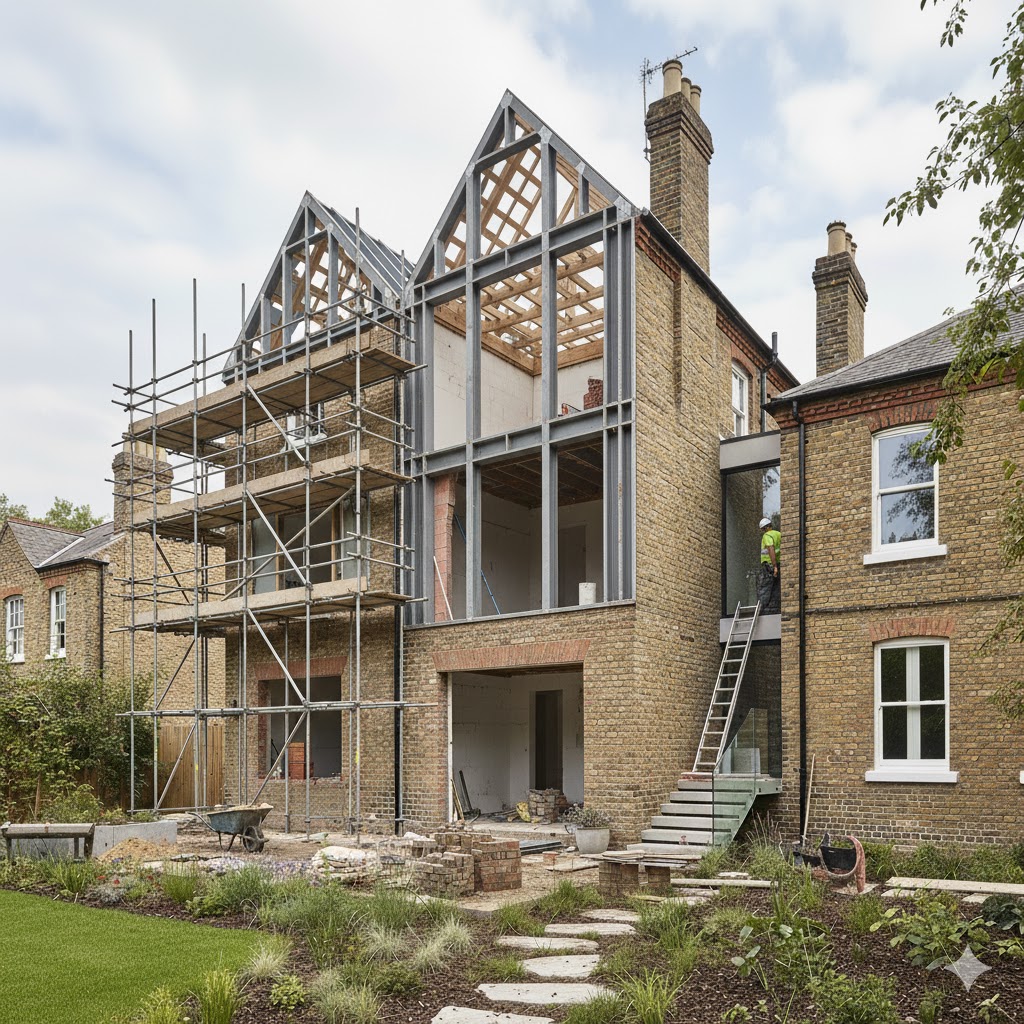
Add a New Floor to Your Home
A loft conversion is one of the most cost-effective ways to add valuable living space to your home without sacrificing garden area. Whether you need an extra bedroom with en-suite, a home office, or a children's playroom, converting your loft can add up to 20% to your property value.
At Ashton Paul, we handle every aspect of your loft conversion — from feasibility assessment and architectural design through to planning, structural work, and fit-out. Our qualified Building Surveyor leads every project, ensuring structural integrity and compliance with building regulations.
Loft Conversion Questions, Answered Clearly
Do I need planning permission for a loft conversion?
Many loft conversions fall under permitted development, but dormer size, roof height, front-facing alterations, conservation areas and flats can all remove that right. Ashton Paul checks the planning route across Surrey and London before the design is fixed, so the drawings match the approval strategy.
Which type of loft conversion adds the most space?
A mansard conversion adds the most usable floor area because it replaces a roof slope with a near-vertical wall, but it almost always needs planning permission. Dormer and hip-to-gable conversions add less space and are more often achievable under permitted development rights.
How much headroom do I need for a loft conversion?
As a working rule you need roughly 2.2 to 2.4 metres from the existing ceiling joists to the ridge before structural work starts. Less than that usually means altering the roof structure or lowering the ceilings below, which changes both the design and the budget.
Does a loft conversion need building regulations approval?
Yes. Every habitable loft conversion needs building control approval covering floor structure, stair design, fire escape, insulation and sound separation. Ashton Paul prepares that information alongside the planning drawings so builders price the real scope rather than an outline sketch.
Compare the options in types of loft conversion, check loft conversion costs in Surrey, or read the full Loft Luxe guide.
Types of Loft Conversion
Dormer Loft Conversion
The most popular option, adding a box-shaped extension to the roof slope. Creates excellent headroom and floor space. Often achievable under permitted development rights.
Hip-to-Gable Conversion
Ideal for semi-detached and detached homes with hipped roofs. Extends the sloping side wall to a vertical gable end, significantly increasing usable space.
L-Shaped Dormer
Combines two dormers to create a large L-shaped space, maximising the loft area. Perfect for creating a master suite with bedroom, en-suite, and dressing area.
Mansard Conversion
Replaces one or both roof slopes with a near-vertical wall and flat roof. Offers the maximum possible space but typically requires planning permission.
Why Choose Ashton Paul
Free feasibility assessment of your loft space
Qualified Building Surveyor BSc (Hons) on every project
Full architectural design and 3D visualisation
Planning applications and permitted development checks
Structural engineering and party wall agreements
Complete project management from start to handover
5.0 stars from 48+ Google reviews
Fixed-price contracts — no hidden surprises