
Party Wall Agreements: What Your Neighbour Can and Can't Do
Extending a terraced or semi-detached house almost always involves the Party Wall Act. When notice is needed, what happens if a neighbour dissents, and who pays the surveyors.
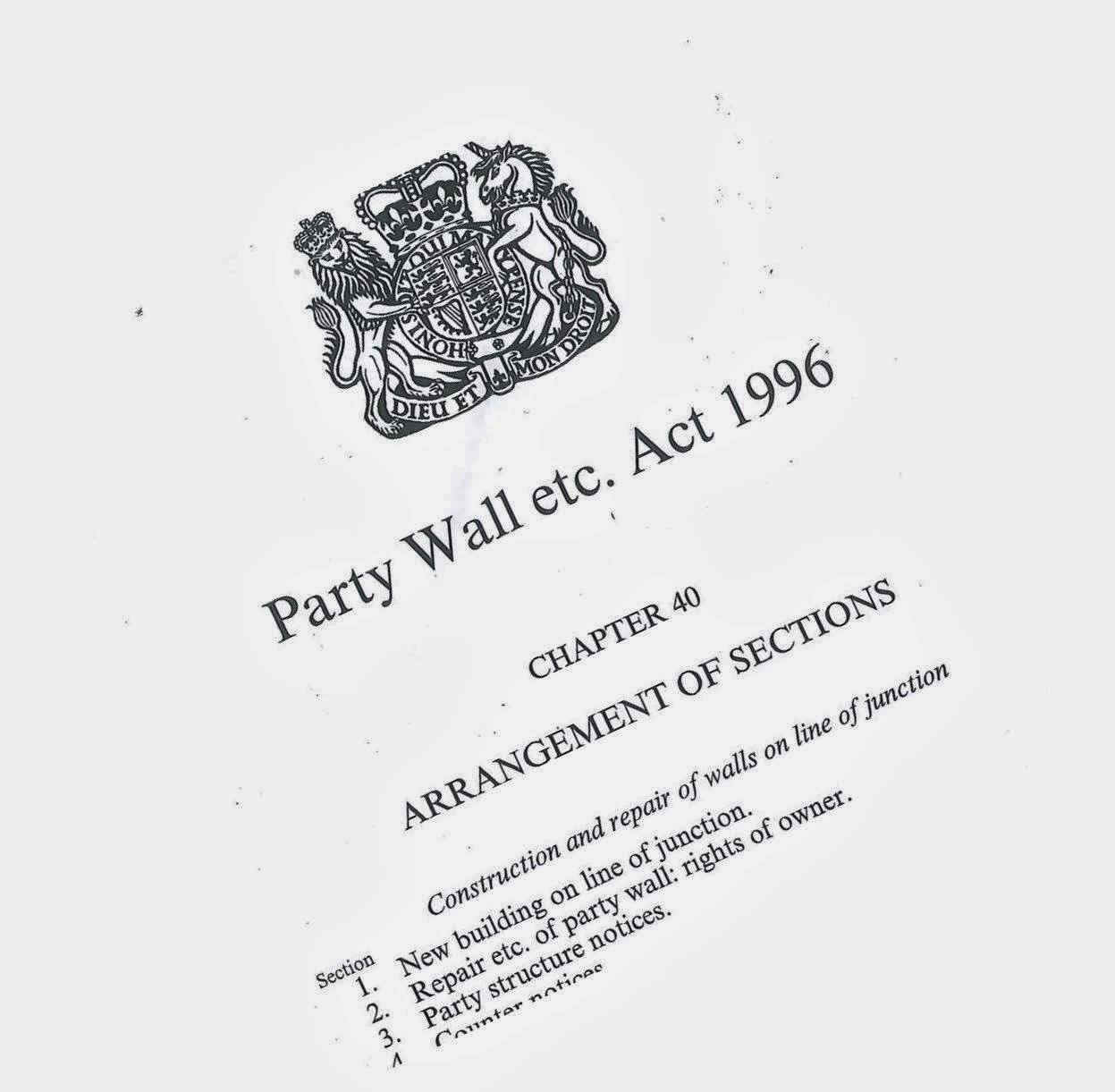
Plan an extension on a detached house in the middle of a big plot and you may never think about the Party Wall Act. Plan one on a terraced or semi-detached house — most of the housing stock across East Surrey and South London — and the Act is almost certainly part of your project, whether you've heard of it or not.
We wrote a plain guide to the Party Wall Act 1996 some years ago, and it remains one of the most-read pages on this site. This is the extension-specific refresher: what actually triggers the Act on a typical project, what the process looks like from your side of the fence, and — the question homeowners really want answered — what your neighbour can and can't do about it.
What the Act is (and isn't)
The Party Wall Act 1996 has applied throughout England and Wales since 1 July 1997. It provides a framework for preventing or resolving disputes about party walls, party structures, boundary walls and excavations near neighbouring buildings — and it grants a building owner rights that go beyond ordinary common law rights to carry out work to a shared wall.
Read that again, because it's the point most people miss: the Act is substantially there to let you do work to a party wall lawfully and fairly — not to hand your neighbour a veto.
A "party wall" is a wall standing across the boundary of land belonging to two or more owners — the wall between you and next door in a terrace or semi. A masonry garden wall astride the boundary is a "party fence wall" and also counts; a timber fence or hedge does not.
What triggers the Act on an extension
Three situations cover most extension projects:
- Work to the shared wall itself. The Act's most commonly used rights include cutting into the party wall to take the bearing of a beam — exactly what happens when your new open-plan kitchen needs a steel picking up on the party wall — plus raising the wall, underpinning it, inserting a damp proof course, or demolishing and rebuilding it.
- Building on or at the boundary line. A side-return or rear extension built up to the line between the properties.
- Excavation near a neighbouring building. Digging foundations for an extension close to next door's structure falls within the Act's scope — the depth and proximity rules are exactly what a party wall surveyor will confirm for your specific design.
If your project does any of these, you must serve written notice on the affected neighbours before the notifiable work starts. On a semi that's one household; mid-terrace, both sides.
The notice: get the basics right
There's no official form, but a valid notice should include your name and address, the address of the property being worked on, a full description of the proposed works, and the planned start date. Date it, and state clearly that it's a notice under the Act. The timing depends on the work:
- Work to an existing party wall or structure (section 2): serve notice at least two months before the planned start.
- A new wall at the boundary (section 1) or excavation near a neighbouring building (section 6): serve notice at least one month before the planned start.
- Each notice is valid for one year — so don't serve it too far ahead of a start date you can't yet commit to. If your project needs more than one type, programme to the longest applicable period.
And one rule of neighbourly common sense that the legislation itself encourages: talk to your neighbours before anything formal lands on the doormat. A notice that arrives cold reads like the opening of a dispute. A notice that arrives after a cup of tea and a look at the drawings usually comes back with written consent.
What your neighbour can do — the three responses
A neighbour receiving notice can:
- Consent in writing. Done — no award needed, works proceed as described. This is the common outcome between neighbours on decent terms.
- Dissent. This doesn't mean "no" — it means the Act's dispute-resolution machinery engages.
- Do nothing. Silence is treated as dissent, and the same machinery engages.
Dissent leads to surveyors. The two owners can agree on a single surveyor, or each appoint their own. The surveyor's job is impartial — they act for the wall, in effect, not as a hired gun for either side — and their output is a binding document: the Party Wall Award.
The award: what it covers, who pays
A Party Wall Award typically sets out the works to be carried out, when and how they'll be done, any additional works required, and access for the surveyors to inspect if necessary. Crucially, it usually includes a schedule of condition — a written and photographic record of the neighbouring property before work starts. That schedule protects both sides: if a crack appears mid-build, everyone knows whether it's new; if a spurious damage claim appears, you have the evidence.
On costs: the building owner usually pays all costs associated with the award, including the adjoining owner's surveyor's fees. Build it into your budget — as we flagged in our cost-per-m² guide, party wall costs sit outside the headline build rate, alongside professional fees and contingency.
What your neighbour can't do
The reassurance most homeowners need: a neighbour cannot block a lawful extension by refusing the party wall notice. Planning permission (or permitted development) decides whether you can build; the Party Wall Act governs how the notifiable parts of the work are carried out relative to the shared structure. Dissent slows the paperwork and adds surveyor fees — it doesn't stop the project.
Equally, the Act cuts both ways. It protects your neighbour from your works being done carelessly, and one day — when they extend — it protects you.
Three everyday scenarios
To make it concrete, here's how the Act plays out on the three extension situations we see most:
The semi with a new open-plan kitchen. The design removes part of the rear wall and lands a steel beam on the party wall. Cutting into the party wall to take the bearing of a beam is one of the Act's most commonly used rights — one notice to the attached neighbour, and in most cases written consent after a friendly conversation over the drawings. The dig for the new foundations may also be notifiable if it's close to the neighbour's structure; your surveyor confirms which notices apply before anything is served.
The terrace side-return. The new wall runs along or up to the boundary, foundations go in a spade's length from next door's kitchen, and — mid-terrace — there may be a neighbour on each side, each entitled to their own notice and, if they dissent, their own surveyor. This is the scenario where budgeting realistically matters most, because the building owner usually funds every surveyor involved.
The nervous neighbour. Sometimes a neighbour dissents not because they object, but because they're anxious and want protection — which is precisely what the Act is for. The award and its schedule of condition give them an independent record and give you a clean process. Don't take dissent personally; the machinery exists so that neither side has to rely on goodwill alone, and plenty of dissents coexist with perfectly good neighbourly relations throughout the build.
The common thread: none of these scenarios threatens the project. They differ only in paperwork, timing and cost — all manageable, all predictable, provided they're identified at design stage rather than discovered by a builder mid-dig.
Slotting it into your programme
The practical trap isn't the Act itself; it's discovering it late. Finding out three weeks before your builder's start date that you need a one-month boundary or excavation notice — or a two-month party-structure notice — means either a delayed start or an awkward scramble for consent. Serve notices as soon as the design is fixed and approvals are in motion — they run happily in parallel with planning and building regulations, and a well-run project treats them as routine admin, not drama. It's one more reason the sequencing we bang on about in how to plan a home extension matters: the plan is what stops the surprises.
As a surveyor-led design and build firm, we flag party wall requirements at the design stage of every attached-house project, so notices go out on time and neighbour relations stay intact. Planning an extension on a terrace or semi? Book a free consultation and we'll tell you exactly which parts of your project are notifiable, what it means for your programme and budget — and how to keep it all thoroughly boring. That's the goal. See our home extensions service for how we run the whole process.
Frequently Asked Questions
Do I need a party wall agreement for my extension?
If your extension involves work to a wall shared with a neighbour — cutting in beams, raising or underpinning it — or excavating for foundations near a neighbouring building, the Party Wall Act 1996 applies and you must serve written notice on the affected neighbours before starting. If they consent in writing, no formal agreement is needed. If they dissent or don't respond, surveyors prepare a Party Wall Award before notifiable work begins.
Can my neighbour stop my extension by refusing the party wall notice?
No. The Party Wall Act is a framework for preventing and resolving disputes, not a veto. Dissenting triggers the appointment of a surveyor (or one for each side) who produces a binding Party Wall Award setting out how and when the notifiable works are carried out — it governs the manner of the work, not whether your lawfully approved extension can happen.
How much notice do I need to give under the Party Wall Act?
The period depends on the notice: allow at least two months for work to an existing party wall or structure under section 2, and at least one month for a new wall at the boundary under section 1 or excavation near a neighbouring building under section 6. Each notice remains valid for a year. If more than one type applies, plan around the longest period and talk to your neighbours before the formal notices arrive.
Who pays party wall surveyor fees?
Usually the building owner — the person doing the works — pays all costs associated with a Party Wall Award, including the adjoining owner's surveyor's fees. Budget for this alongside your professional fees: party wall costs sit outside the headline build cost per square metre.